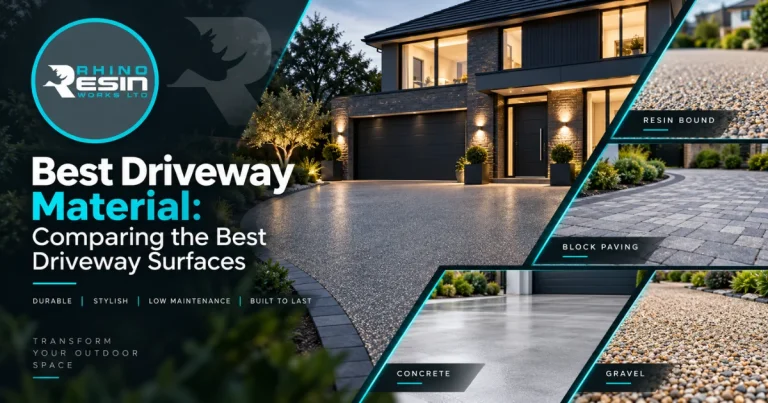
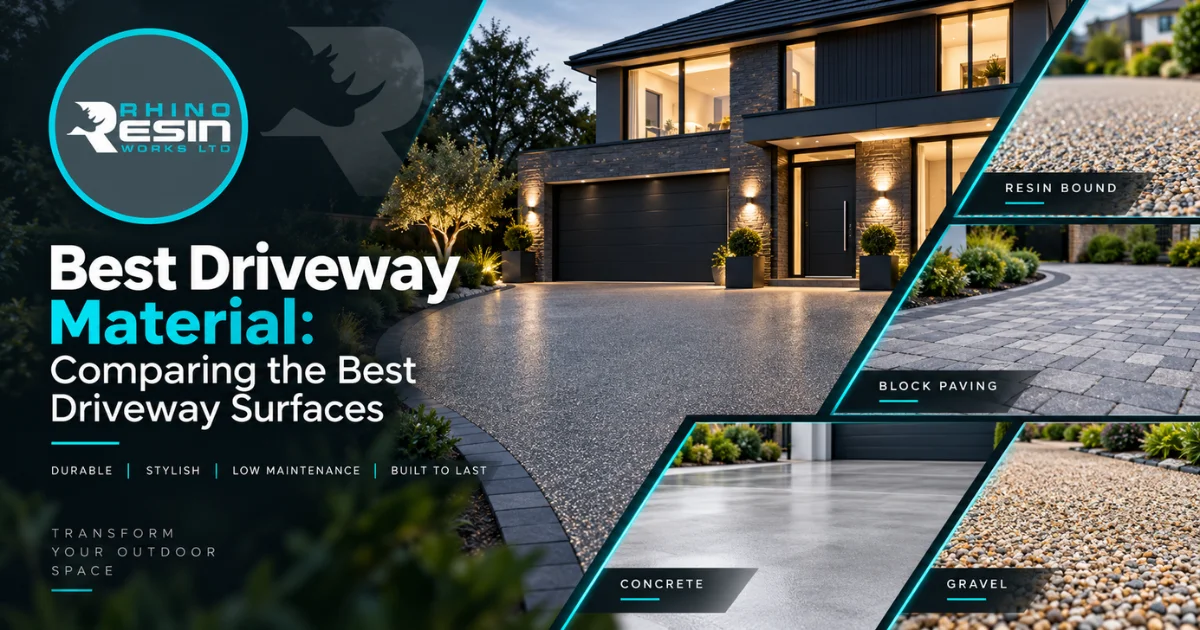
Choosing the best driveway material depends on more than appearance. Your driveway needs to handle vehicles, rainfall, regular use and everyday wear while also fitting the style of your home.
There are several options available, including resin bound, block paving, concrete, tarmac and gravel. Each driveway surface has different advantages, costs, maintenance needs and design possibilities.
If you are deciding which material to use for a new driveway or looking for suitable driveway coverings, this guide compares the most popular options to help you make an informed choice.
What Is the Best Driveway Material?
There is no single driveway material that is best for every property. The right choice depends on what matters most to you.
For example:
- Resin bound is a strong option for appearance, drainage and design flexibility.
- Block paving offers a traditional appearance and individual replaceable blocks.
- Concrete provides a solid and versatile surface.
- Tarmac is practical and commonly used for larger areas.
- Gravel can provide a lower-cost option with a natural appearance.
Your budget, driveway size, ground conditions, drainage requirements and preferred appearance should all influence the decision.
Best Driveway Surfaces Compared
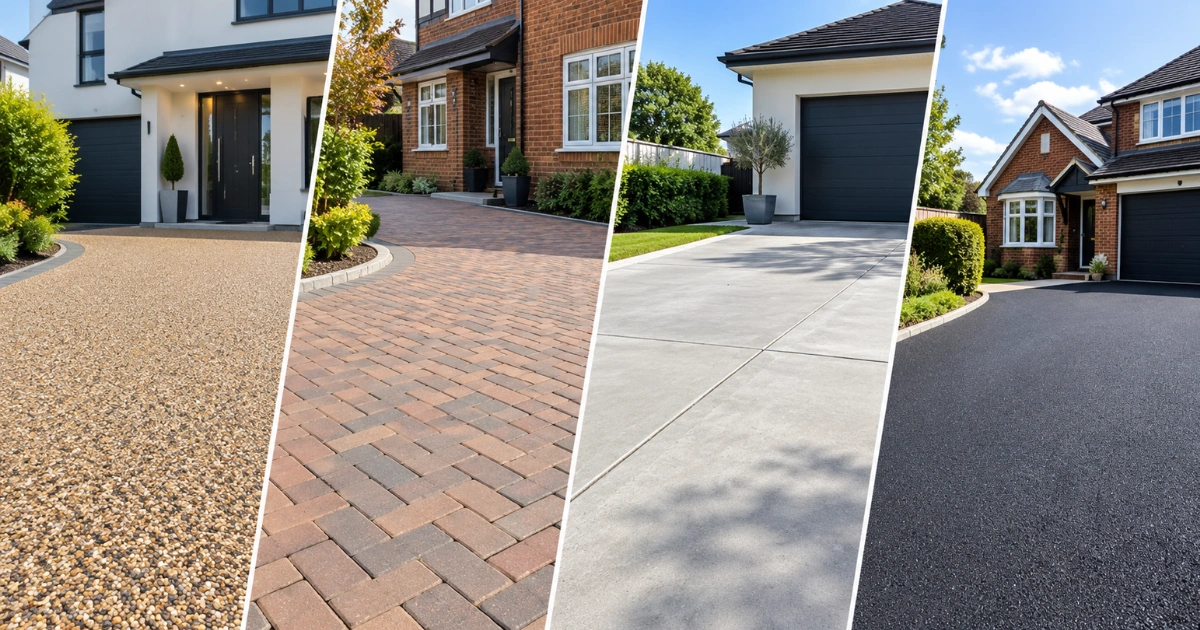
1. Resin Bound
Resin bound surfacing combines aggregate with resin and creates a smooth, attractive surface once installed.
It is popular with homeowners who want a driveway that looks more decorative than standard tarmac or concrete.
Advantages of resin bound driveways include:
- A wide choice of aggregate colours
- Smooth and comfortable surface
- Many design and edging options
- Permeable surface when installed correctly
- Suitable for modern and traditional properties
- No loose stones across the finished surface
- Can be used for resin driveways, paths and other areas
Resin bound is particularly useful when appearance is an important part of the decision. Different aggregates can be combined to create subtle or contrasting finishes.
2. Block Paving
Block paving remains a popular choice for residential driveways. Individual blocks can be arranged in different patterns and colours, allowing homeowners to create a traditional or contemporary appearance.
One of its useful features is that individual damaged blocks can usually be removed and replaced rather than replacing the entire surface.
However, block paving contains joints between the blocks. These areas can collect weeds and dirt if the driveway is not maintained.
3. Concrete
Concrete provides a hard, solid driveway surface and is available in different finishes.
A plain concrete driveway can provide a simple appearance, while decorative finishes can create more visual interest.
Concrete can be suitable for homeowners looking for a robust surface, but cracks can develop if the ground moves or the installation does not properly account for movement and drainage.
Repairs can also be more noticeable depending on the type and extent of damage.
4. Tarmac
Tarmac is a practical driveway surface that is commonly used for both residential and larger access areas.
Its dark appearance creates a straightforward finish and works particularly well when practicality is more important than decorative design.
Tarmac is generally less flexible in terms of colour and patterns compared with resin bound or block paving.
It can be a good choice for:
- Long driveways
- Larger parking areas
- Properties requiring a simple surface
- Projects where practical access is the priority
5. Gravel
Gravel is another common driveway covering, particularly for larger properties and rural-style homes.
It can create a natural appearance and does not require the same type of solid surface installation as resin, concrete or tarmac.
However, loose gravel can move under vehicle tyres and may spread onto surrounding paths or roads. Regular raking and topping up may also be required.
For some properties, gravel provides an attractive and practical solution, but it is important to choose suitable aggregate and prepare the driveway correctly.
Which Driveway Surface Looks Best?
Appearance is often one of the biggest factors when choosing a driveway.
Resin bound and block paving generally offer the greatest flexibility if you want a decorative driveway.
Resin bound allows you to choose from different aggregate mixes and create contrasting borders or other design features.
Block paving offers different colours, shapes and laying patterns.
Concrete can also be decorative, depending on the finish selected, while tarmac and gravel tend to have a more straightforward appearance.
The best-looking surface ultimately depends on the property. A warm natural aggregate may suit a traditional brick house, while a grey resin finish may work better with a modern exterior.
Which Driveway Material Is Best for Drainage?
Drainage should be considered before choosing any driveway material.
Resin bound surfacing can provide a permeable driveway when the system is installed correctly over a suitable permeable base. Water can pass through the surface rather than simply running across it.
Other driveway surfaces can also incorporate drainage solutions, but their drainage performance depends on the complete construction rather than the surface material alone.
If your property has existing drainage problems, choosing a surface without considering the underlying ground and water flow may not solve the issue.
Which Driveway Material Requires the Least Maintenance?
Every driveway needs some maintenance, but the type and amount vary.
Resin bound: Usually requires routine sweeping and cleaning to remove dirt, leaves and organic growth.
Block paving: May need joint maintenance, weed removal, cleaning and occasional replacement of damaged blocks.
Concrete: Generally requires routine cleaning, with repairs potentially needed if cracks or surface damage develop.
Tarmac: Usually needs basic cleaning and monitoring for cracks, edge damage and surface deterioration.
Gravel: Requires occasional raking and may need additional gravel where stones have moved or become displaced.
Good installation and suitable drainage can make a significant difference to the long-term condition of any driveway.
What Is the Best Driveway Material for a Sloping Driveway?
A sloping driveway needs careful planning because water movement, surface grip and drainage become particularly important.
The driveway material should be selected alongside the correct base, drainage arrangements and falls.
Resin bound surfacing can work well on suitable slopes because it creates a continuous finished surface without loose stones. Block paving can also be used on sloping driveways when correctly installed.
The important point is not simply choosing a material. The complete driveway construction needs to suit the slope and expected water flow.
Best Driveway Coverings for Different Properties
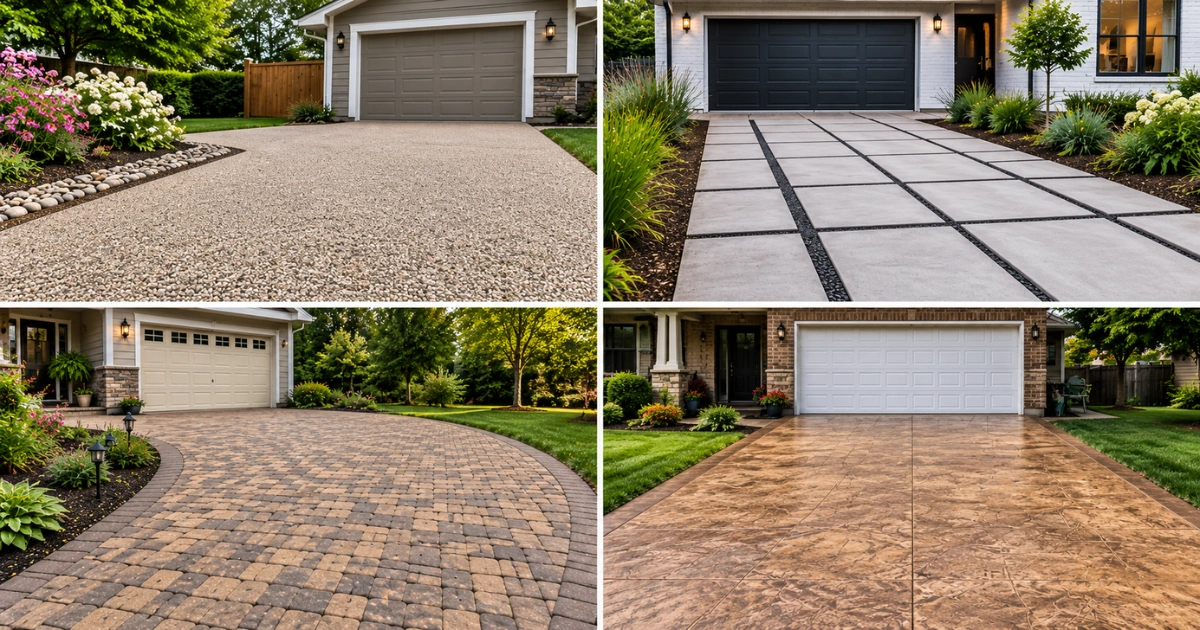
Different properties can benefit from different driveway surfaces.
Modern Houses
A clean resin bound finish, contemporary block paving or simple tarmac can complement modern architecture.
Traditional Houses
Natural resin aggregate, block paving and gravel can work well with brickwork, stone and established gardens.
Large Driveways
Tarmac, gravel, block paving and resin can all be suitable depending on the required appearance and budget.
Small Driveways
Resin bound and block paving can provide attractive finishes where you want the driveway to contribute to the appearance of the front of the property.
Resin Bound vs Block Paving
Resin bound and block paving are two popular options for homeowners who want more than a basic driveway surface.
| Feature | Resin Bound | Block Paving |
| Appearance | Smooth decorative finish | Individual blocks and patterns |
| Colour choice | Wide range of aggregate mixes | Wide range of block colours |
| Surface | Continuous | Individual paving blocks |
| Design options | Colours, borders and features | Colours, shapes and laying patterns |
| Drainage | Can be permeable | Depends on construction and jointing |
| Maintenance | Generally straightforward | Joints may need maintenance |
| Repairs | Local repairs may be possible | Individual blocks can be replaced |
The better option depends on the look you want, your property and how the driveway will be used.
How to Choose the Best Driveway Material
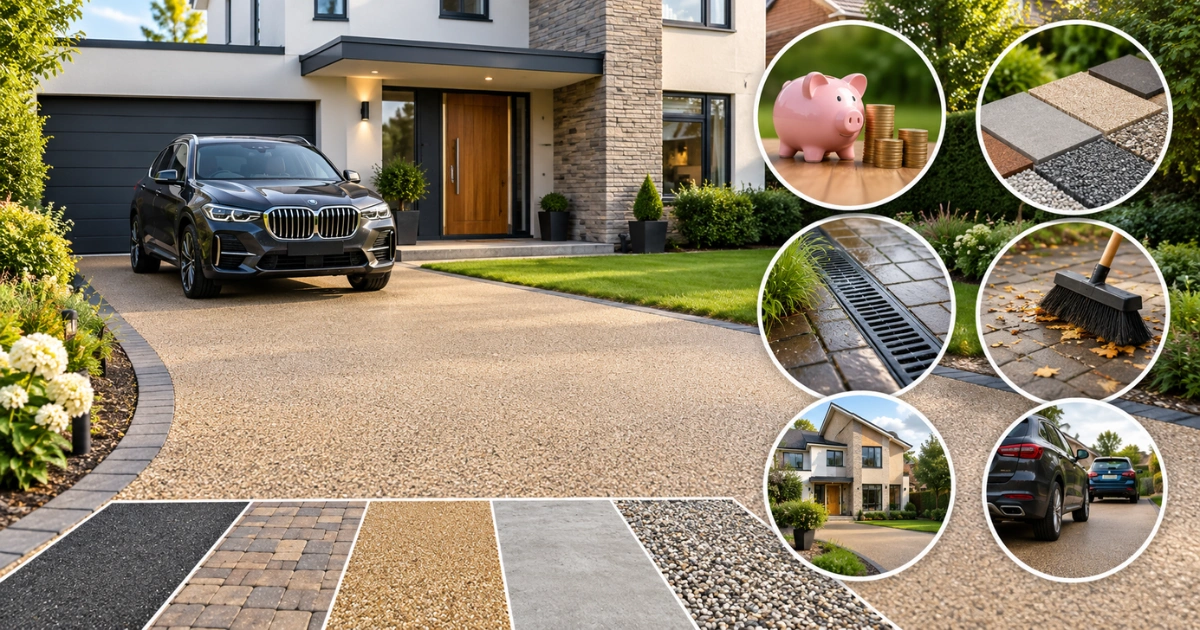
Before choosing a driveway covering, consider these factors.
Consider Your Budget
Compare the complete project cost rather than only the price of the surface material. Preparation, excavation, drainage, edging and installation can all affect the final price.
Think About Appearance
Look at completed driveways rather than choosing a material from a small sample. The same aggregate or paving colour can look very different across a complete driveway.
Consider Drainage
Think about where rainwater currently goes and whether the driveway needs additional drainage measures.
Consider Maintenance
Decide how much ongoing cleaning and maintenance you are prepared to carry out.
Look at the Existing Property
Your driveway should complement the house, walls, garden and other exterior features.
Consider How You Use the Driveway
A driveway used by several vehicles every day may have different requirements from a small residential parking area.
Is Resin Bound the Best Driveway Surface?
For homeowners who want a combination of appearance, design flexibility and a smooth continuous finish, resin bound can be one of the strongest driveway options.
It allows you to choose different aggregate colours and create designs that complement the property. When correctly installed over a suitable base, it can also provide a permeable surface.
However, it is not automatically the best choice for every driveway. Ground conditions, drainage, vehicle use, budget and existing surfaces should all be considered before deciding.
Final Words
The best driveway material is the one that suits your property, budget and practical requirements.
Resin bound, block paving, concrete, tarmac and gravel all have their own advantages. Resin bound stands out when you want a decorative, smooth surface with a wide range of aggregate and design choices, while block paving provides flexible patterns and individual replaceable units. Concrete and tarmac offer practical solid surfaces, while gravel can provide a natural and often simpler alternative.
Before choosing your driveway surface, compare completed examples, consider drainage and maintenance, and make sure the underlying preparation is suitable for the material you select.