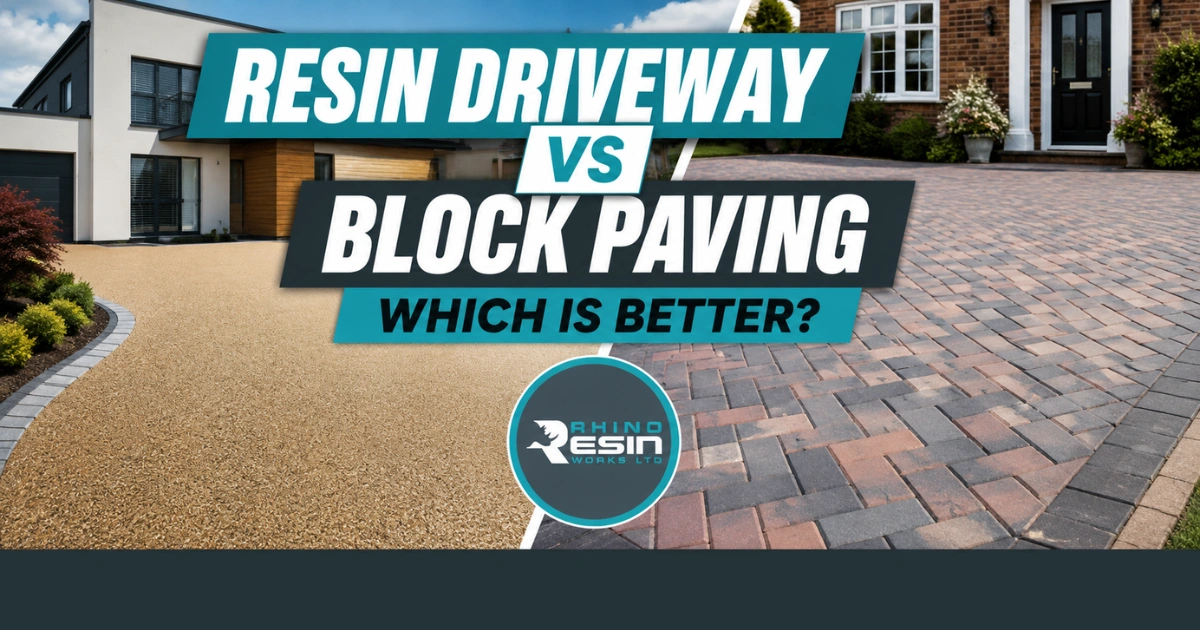
When choosing a new driveway, you typically have two popular options: a resin driveway or block paving. Both can create an attractive entrance to your home, but they offer different benefits when it comes to drainage, maintenance, appearance, cost, and long-term use.
So, which one is better?
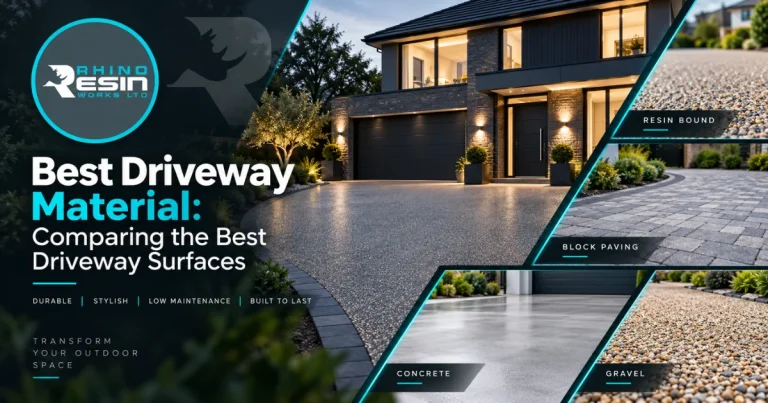
For homeowners who want a smooth, modern, low-maintenance and permeable driveway, resin is often the better choice. Block paving can work well if you prefer a traditional appearance and want more flexibility with individual blocks.
Resin Driveway vs Block Paving: Quick Comparison
| Feature | Resin Driveway | Block Paving |
|---|---|---|
| Appearance | Smooth and seamless | Traditional and patterned |
| Drainage | Resin bound systems can provide full permeability | Water usually drains through joints or separate drainage |
| Maintenance | Generally low maintenance | Requires more regular joint maintenance |
| Weed Growth | No open joints for weeds to grow through | Weeds can grow between paving joints |
| Surface | Smooth and even | Individual blocks create joints |
| Design Options | Wide choice of aggregate colours | Many block colours and patterns |
| Repairs | Damaged areas may need local repair | Individual blocks can often be replaced |
| Installation | Requires professional preparation | Requires careful laying and base preparation |
What Is a Resin Driveway?
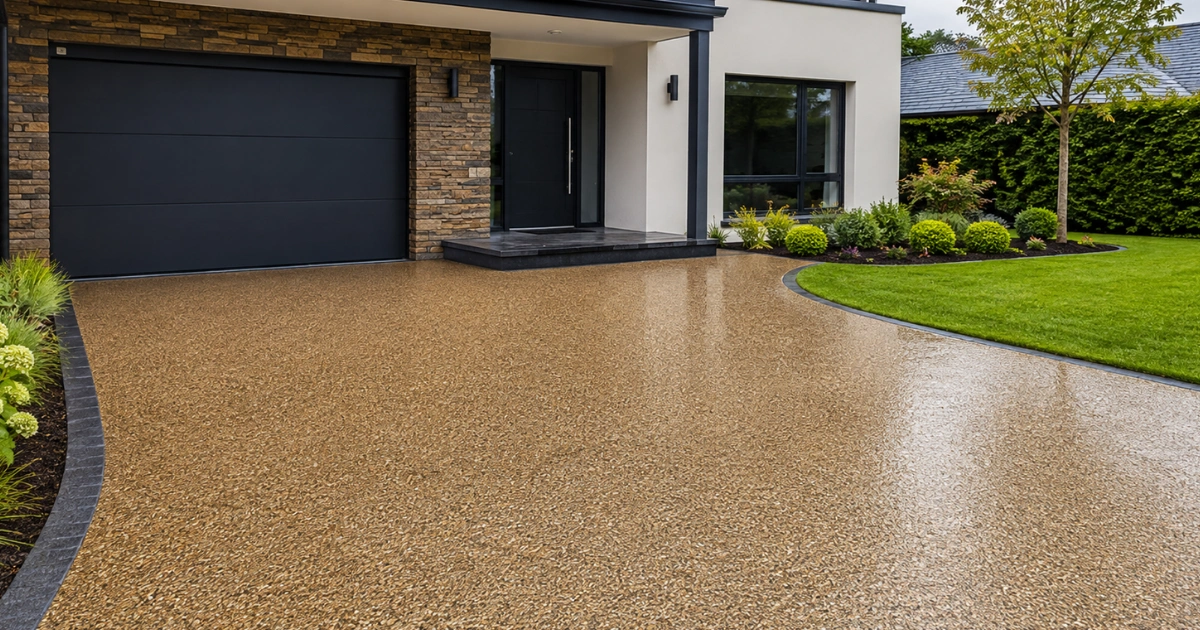
A resin driveway combines resin with natural stone aggregates to create a solid surface.
With a resin bound system, installers mix the resin and aggregates together before laying the mixture onto a properly prepared base.
This creates a smooth surface without the visible joints found between paving blocks. A resin driveway can provide:
- A smooth finish that creates a clean and modern appearance around your property.
- A permeable surface that allows rainwater to pass through when the correct system and base support drainage.
- A wide choice of natural aggregate colours that can complement your home and garden.
- A low-maintenance surface that does not require regular joint filling or block repositioning.
What Is Block Paving?
Block paving uses individual concrete or clay blocks laid across a prepared base.
Installers can arrange the blocks in different patterns to create traditional or contemporary driveway designs.
Block paving offers plenty of design flexibility, and you can replace individual blocks if damage occurs.
However, the joints between the blocks require regular attention because weeds, moss, and dirt can collect between them.
Resin Driveway vs Block Paving: Which Looks Better?
This depends on the style you want for your property.
A resin driveway creates a seamless appearance that works particularly well with modern homes. You can choose from different aggregate colours and blends to create a finish that suits your exterior.
Block paving provides a more traditional look. Different block colours, patterns, borders, and laying styles allow you to create a distinctive driveway.
If you want a clean and contemporary finish, resin often provides the stronger visual result. If you prefer defined patterns and individual paving units, block paving may suit you better.
Which Provides Better Drainage?
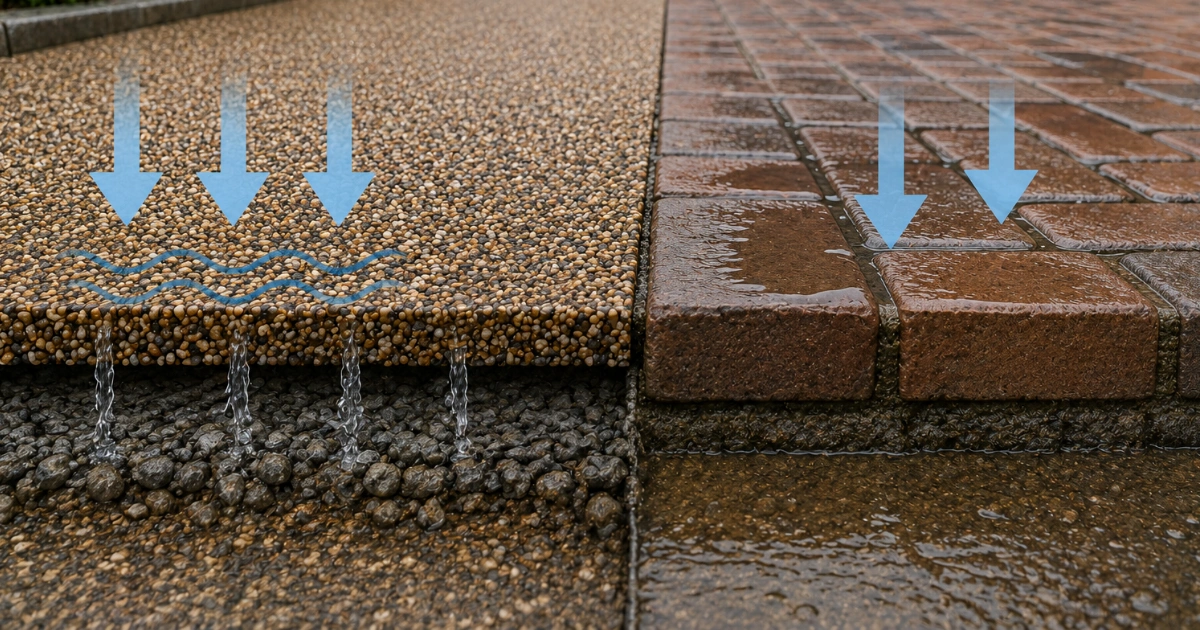
A resin bound driveway can provide excellent drainage because water can pass through the gaps between the aggregate particles.
This can help reduce surface water and puddles during heavy rainfall.
Block paving does not normally provide the same level of surface permeability across the entire driveway. Water can pass through the joints between blocks, but the base and jointing materials can affect how effectively water drains.
Both systems can include additional drainage solutions where the site requires them.
Resin Driveway vs Block Paving: Which Is Easier to Maintain?
Resin generally requires less routine maintenance than block paving.
A resin driveway has no traditional paving joints, so you do not need to regularly remove weeds from gaps between individual blocks. Basic maintenance usually involves:
- Sweeping the surface regularly to remove leaves, dirt, and other debris.
- Cleaning stains and spills promptly to prevent them from becoming harder to remove.
- Removing moss or algae if they appear in damp or shaded areas.
- Keeping nearby drainage channels and edges clear so rainwater can move away properly.
Block paving needs similar general cleaning, but the joints can require additional maintenance.
Which Is Better for Preventing Weeds?
Resin has an advantage because a resin bound surface does not have the open joints found between individual paving blocks.
This reduces the places where weeds can establish themselves.
Block paving contains joints between each block. Over time, these joints can collect soil, seeds, and organic material, which can encourage weed growth.
Regular cleaning and joint maintenance can help control this issue.
Resin Driveway vs Block Paving: Which Driveway Is More Durable?
Both resin and block paving can provide long-lasting driveways when installers prepare the base correctly.
The quality of the foundation matters as much as the surface material.
A resin driveway can provide many years of service when professionals install it correctly using suitable materials and proper groundwork.
Block paving can also last for many years, but individual blocks may move or sink if the foundation fails or the ground underneath settles.
For both options, professional preparation remains essential.
Which Is Better in Manchester Weather?
Manchester experiences frequent rainfall, cold temperatures, and changing weather throughout the year.
A properly installed resin bound driveway can handle these conditions well because the surface allows water to drain through it.
Block paving can also perform well in UK weather, but water can collect in joints or damaged areas if the surface does not drain properly.
Resin can provide an advantage where homeowners want a smooth, permeable surface that helps manage rainfall.
Resin Driveway vs Block Paving: Which Is Cheaper?
The total cost depends on the size of the driveway, groundwork, materials, access, design, and installation requirements.
A resin driveway may cost more initially than some basic block paving options. However, the final price depends on the quality and type of blocks selected and the amount of preparation required.
Block paving can also become more expensive when you add:
- Premium paving blocks and specialist patterns that require more detailed installation.
- Decorative borders that create additional material and labour costs.
- Extensive excavation and new foundation work across the driveway.
- Drainage systems where the existing property cannot manage surface water effectively.
Rather than choosing based only on the initial price, consider the expected maintenance and long-term performance.
Which Is Easier to Repair?
Block paving has an advantage when you need to replace individual damaged sections.
Installers can remove and replace specific blocks without necessarily disturbing the entire driveway.
Resin repairs depend on the type and extent of the damage. A professional can repair some localised areas, but the finished repair may not always blend perfectly with an older resin surface.
However, good installation and proper maintenance can help reduce the risk of significant damage to either surface.
Which Gives You More Design Options?
Both materials offer plenty of design choices.
Resin Driveway Designs
Resin lets you choose from a range of aggregate colours and blends. You can also add contrasting borders to create a more defined design.
This works well for homeowners who want a modern driveway that complements their property.
Block Paving Designs
Block paving offers a variety of shapes, colours, patterns, and border combinations.
You can create traditional herringbone patterns, basketweave designs, or more contemporary layouts.
Your choice ultimately depends on the appearance you want to achieve.
Is Resin Better Than Block Paving for a Modern Home?
Resin often works particularly well with modern properties.
Its seamless appearance creates a clean transition between the driveway, garden, pathways, and other outdoor areas.
Block paving can also suit modern homes, especially when you select contemporary blocks and simple patterns.
If your priority is a smooth, modern and low-maintenance driveway, resin has a clear advantage.
Is Block Paving Better Than Resin for Traditional Homes?
Block paving can work particularly well with traditional properties because its individual blocks and patterns create a classic appearance.
You can use different colours and borders to complement brickwork, stone features, and traditional garden designs.
However, resin can also suit older homes if you choose natural aggregate colours that blend with the existing property.
Resin Driveway or Block Paving: Which Should You Choose?
Choose resin if you want:
- A modern driveway with a smooth and seamless appearance that complements contemporary homes.
- A permeable surface that helps manage rainwater across your outdoor space.
- A low-maintenance driveway without traditional paving joints that collect weeds.
- A wide selection of aggregate colours and blends for a personalised finish.
Choose block paving if you want:
- A traditional driveway with clearly defined blocks and decorative patterns.
- The option to replace individual paving blocks if local damage occurs.
- A large range of block colours, shapes, patterns, and border designs.
- A driveway style that closely matches traditional brick and stone properties.
Why Choose Rhino Resin Works for Your Resin Driveway?
At Rhino Resin Works, we install resin bound driveways for homeowners who want a durable, attractive, and low-maintenance outdoor surface.
Our team brings 10+ years of experience and City & Guilds certification to resin surfacing projects. We focus on proper preparation, quality materials, accurate installation, and a finish that complements your property.
We also provide a 10-year guarantee on our resin installations, giving you added confidence in the work.
Final Words
Both resin and block paving can create attractive and durable driveways, but they suit different priorities.
Resin is often the better option if you want a modern, smooth, permeable, and low-maintenance surface. Block paving may suit you better if you prefer traditional patterns, individual blocks, and easier local replacement.
Before making your decision, consider your property’s style, drainage needs, maintenance expectations, budget, and how you plan to use the driveway.