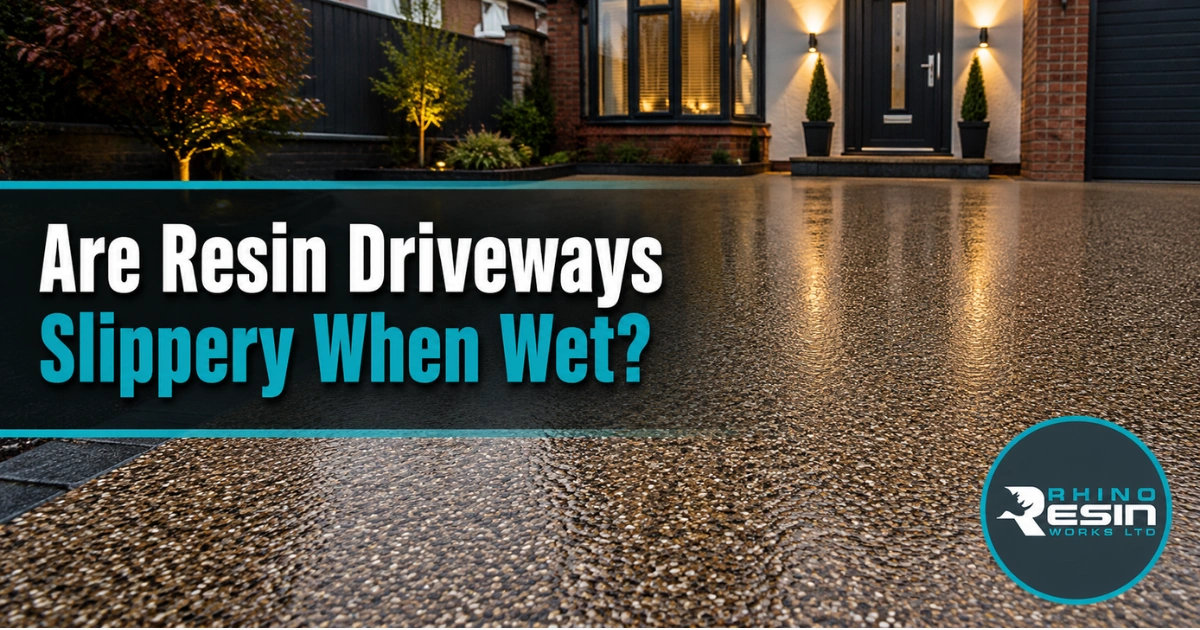
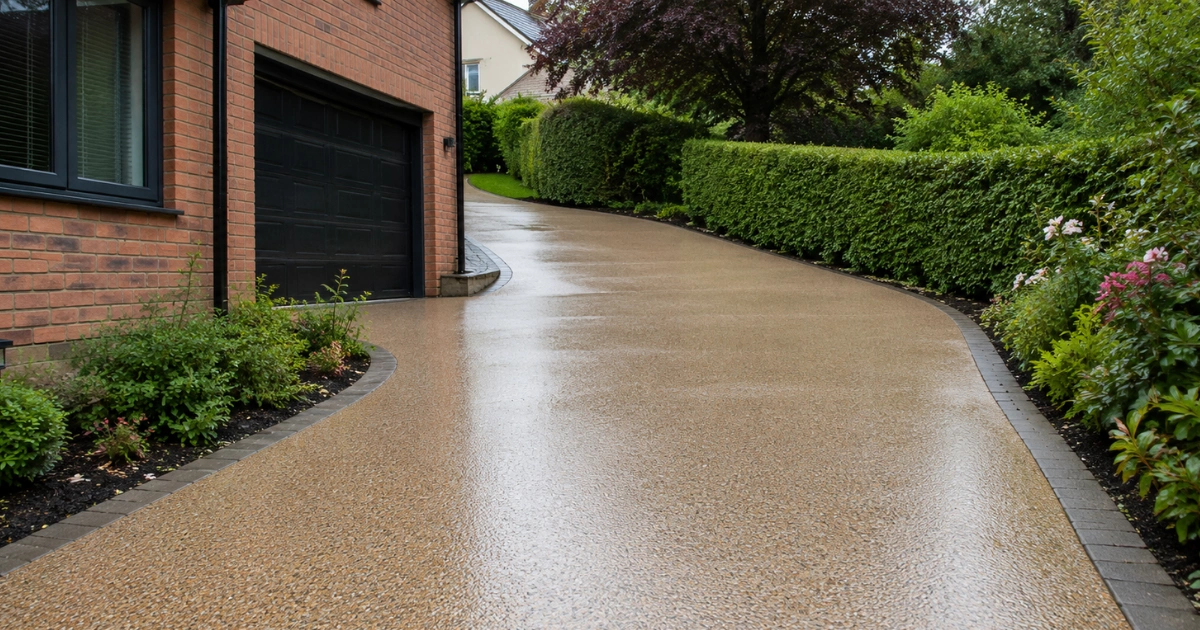
No, a professionally installed resin driveway is not usually slippery when wet. Resin bound surfaces provide good grip because the natural stone aggregates create a textured finish that helps improve traction.
Unlike smooth concrete or some paving materials, resin allows rainwater to drain through the surface, which helps reduce standing water and improves safety during wet conditions.
However, the slip resistance depends on the quality of installation, aggregate choice, and surface texture.
Why Are Resin Driveways Generally Slip Resistant?
Resin driveways use a mixture of resin and natural aggregates to create a strong, textured surface. The small stones within the resin provide a rough finish that helps shoes and tyres maintain contact with the driveway.
Key reasons resin driveways provide good grip include:
- Natural stone texture creates better traction — The exposed aggregate particles create a slightly textured surface that helps reduce slipping risks during rainy weather.
- Permeable surface allows water to drain away — Resin bound driveways allow rainwater to pass through the surface, reducing puddles and standing water.
- Smooth finish without becoming completely flat — Resin provides a clean appearance while maintaining enough surface texture for everyday walking and vehicle movement.
- Strong grip during normal weather conditions — A correctly installed resin driveway remains stable and safe for pedestrians, vehicles, and outdoor use.
Can Rain Make a Resin Driveway Slippery?
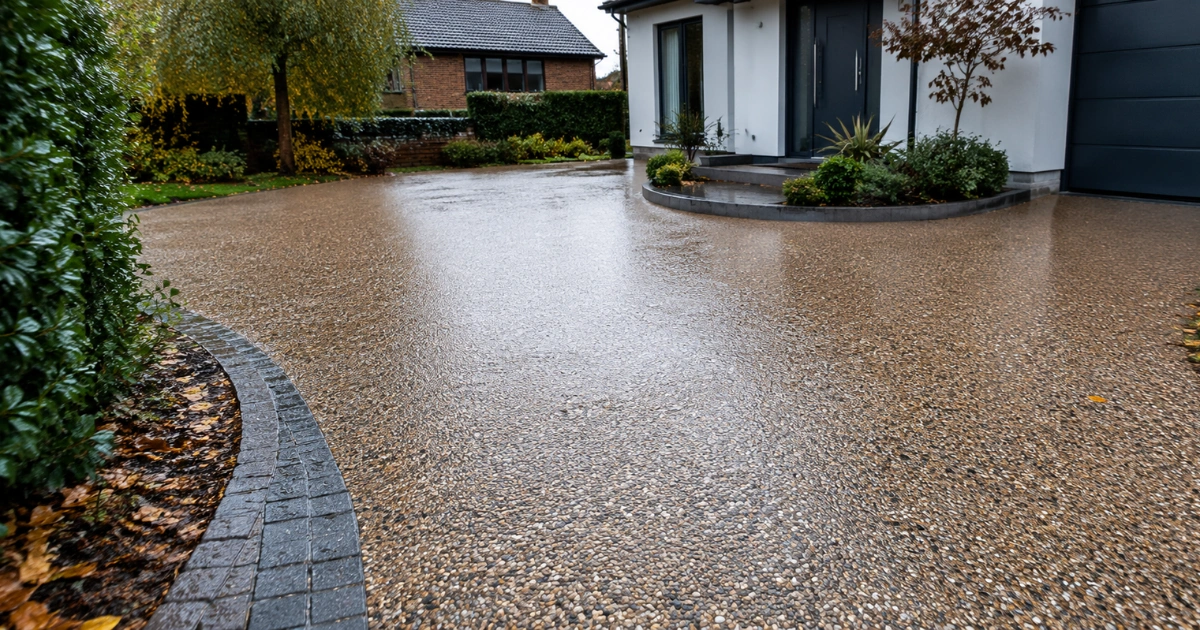
Rain alone does not make a resin driveway unsafe. The surface design helps water drain away instead of allowing large puddles to form.
However, temporary slipperiness can happen if the surface collects:
- Leaves and organic debris creating a damp layer — Wet leaves, dirt, and natural materials can reduce grip if they remain on the surface for long periods.
- Algae or moss growth in shaded areas — Damp locations with limited sunlight may develop algae, which can affect the surface grip.
- Oil or chemical spills affecting surface texture — Vehicle fluids and spills can create slippery patches if they are not cleaned quickly.
Regular cleaning helps maintain the safety and appearance of the driveway.
Are Resin Driveways Slippery in Winter?
Resin driveways perform well during cold UK winters when installed correctly.
The textured finish helps provide grip during wet and frosty conditions. The permeable structure also reduces surface water, which can lower the risk of ice forming.
However, like any outdoor surface, ice and frost can make a driveway slippery.
To improve winter safety:
- Remove heavy snow and ice build-up when possible
- Clear leaves and debris regularly
- Keep drainage areas free from blockages
- Avoid allowing algae growth to develop
What Makes a Resin Driveway More Slip Resistant?
Several installation factors affect how much grip a resin driveway provides.
Aggregate Size and Type
The type and size of stone aggregates influence the surface texture. Larger or more textured aggregates can provide additional grip.
Quality of Resin Installation
Professional installation ensures the resin and aggregates mix correctly and create a consistent surface.
Proper Surface Preparation
A strong, stable base prevents movement and helps maintain the original surface texture over time.
Correct Finish Selection
Homeowners can choose finishes that balance appearance with practical slip resistance.
How to Improve Grip on a Resin Driveway
A well-maintained resin driveway should remain safe, but simple care can help maintain its performance.
Follow these steps:
- Clean dirt and debris regularly — Regular sweeping prevents organic materials from creating slippery areas.
- Remove algae and moss early — Treat green growth before it spreads across larger sections of the surface.
- Clean oil spills quickly — Removing vehicle fluids prevents slippery patches and staining.
- Use suitable cleaning products — Mild detergents protect the resin while removing unwanted marks.
Are Resin Driveways Safe for Families?
Yes, resin driveways are a safe choice for most homes when installed correctly.
The smooth but textured finish makes them suitable for:
- Family homes with children using outdoor spaces
- Properties with regular foot traffic
- Homes requiring accessible outdoor surfaces
- Driveways used by multiple vehicles
The combination of drainage, durability, and grip makes resin a popular option for modern UK properties.
How Does Resin Compare to Other Driveway Surfaces?
Resin vs Concrete
Concrete can become slippery when wet, especially if it has a smooth finish. Resin provides better drainage and surface texture.
Resin vs Block Paving
Block paving can develop slippery areas when moss grows between joints. Resin reduces this issue because it creates a seamless surface.
Resin vs Gravel
Loose gravel can move underfoot and become difficult to walk on. Resin keeps aggregates fixed in place, creating a stable surface.
Final Words
Are Resin Driveways Slippery? Resin driveways are not naturally slippery when wet. A properly installed resin bound driveway provides a textured surface, excellent drainage, and reliable grip throughout the year.
Like any outdoor surface, regular cleaning and maintenance help prevent algae, dirt, and debris from affecting safety.
For homeowners looking for a modern, low-maintenance driveway with good weather performance, resin remains one of the safest and most practical choices.