When it’s time to replace your driveway, two of the most popular options are resin bound and concrete. But they serve completely different needs.
Concrete is tough, cheap upfront, and handles heavy loads. But it cracks, holds puddles, and looks industrial.
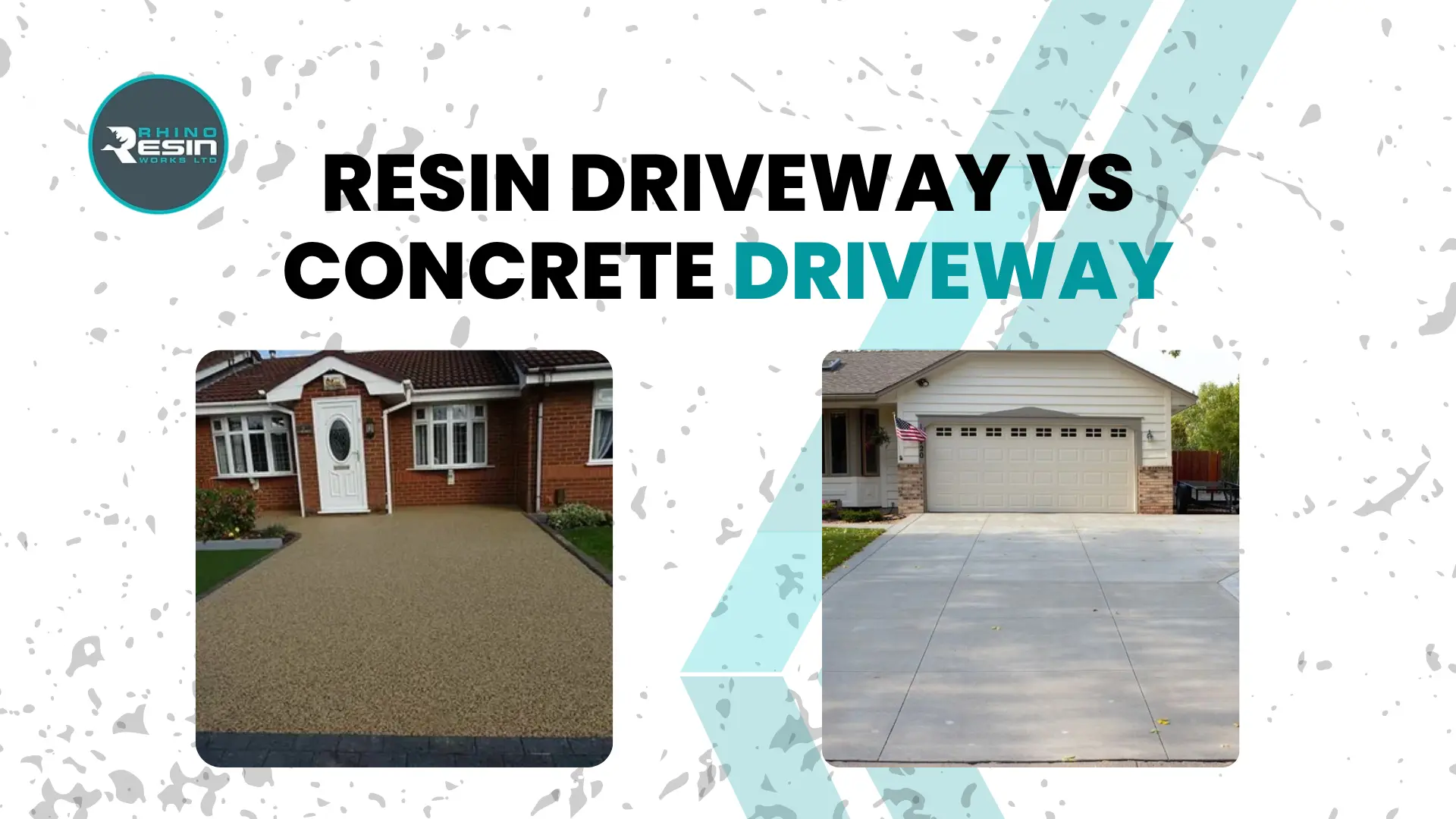
Resin bound is modern, beautiful, fully permeable, and almost maintenance‑free. It costs a little more upfront but delivers better value over time.
At Rhino Resin Works, we install resin bound driveways because we believe your home deserves more than a grey slab. Below, we provide an honest, side-by-side comparison and explain why resin is the smarter choice for most UK homeowners.
Quick Feature Comparison Table
| Feature | Resin‑Bound Driveway (Rhino Resin Works) | Concrete Driveway |
|---|---|---|
| Average Initial Cost | Higher (£60–£120 per m²) | Lower to moderate (£40–£80 per m²) |
| Water Drainage | Fully permeable – SUDS compliant | Impermeable – needs drainage channels |
| Weed Resistance | High – seamless surface, no cracks | Low – weeds grow in expansion joints & cracks |
| Heavy Vehicle Load | Good for cars & vans; not for daily HGVs | Excellent load‑bearing strength |
| Lifespan | 15–20+ years (with proper sub‑base) | 20–30+ years (but cracks appear early) |
| Maintenance | Low – annual sweep & light hose | Medium – needs resealing every 2–3 years |
| Aesthetics | Bespoke colours, natural stone finish | Grey, plain, or imprinted (can look artificial) |
| Flexibility | Moves with ground shifts – resists cracking | Rigid – cracks under freeze‑thaw or movement |
Resin Bound Driveways: The Modern Choice
A resin bound system blends natural aggregate stones with a high‑performance, UV‑stable polyurethane resin. The mixture is hand‑trowelled onto a solid base to create a smooth, flat, seamless surface.
Excellent Water Drainage (No Puddles)
Resin bound driveways are fully permeable. Rainwater passes straight through to the ground below.
- No standing puddles after rain.
- No need for expensive drainage channels or gullies.
- Compliant with Sustainable Urban Drainage Systems (SUDS) – often means no planning permission required.
- Protects your home from surface water flooding.
Concrete cannot do this. Concrete is solid. Every puddle must slope into a drain, or it sits on your driveway for hours.
Bespoke Aesthetics – Match Any Home
You are not stuck with grey.
- Choose from dozens of natural stone colours – from warm harvest golds to cool slates.
- Add borders, logos, or bespoke patterns.
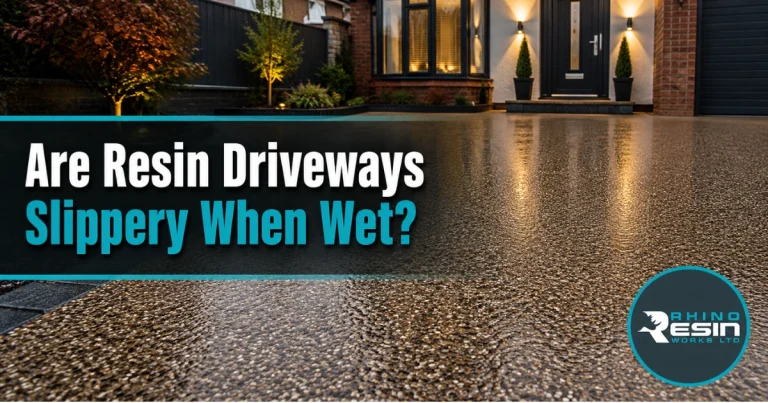
- The finish is smooth, slip‑resistant, and beautiful.
Concrete can be stamped or coloured, but it still looks like painted concrete – not natural stone.
Flexible Strength – Resists Cracking
Resin has natural flexibility. When the ground shifts slightly (freeze‑thaw, tree roots, settling), a resin driveway moves with it without cracking.
Concrete is rigid. It does not bend. One winter with a hard frost, and you will see hairline cracks across a new concrete driveway.
Almost Zero Maintenance
- Sweep occasionally.
- Hose down once or twice a year.
- That is it.
- No sealing. No weed killer. No pressure washing every spring.
One Honest Limitation (We Tell You Upfront)
Resin bound driveways are great for cars, vans, and everyday household vehicles. However, repeated turning of heavy multi‑ton delivery trucks (e.g., skip lorries, concrete mixers) or sharp metal tracks can mark or indent the surface.
If you park a 10‑ton commercial vehicle daily, concrete may be better. For 99% of homeowners? Resin is perfect.
Concrete Driveways: The Traditional Heavyweight (Not Preferred)
Concrete is a simple mix of cement, aggregate, and water, poured over a prepared sub‑base and left to harden. It has been used for decades because it is cheap and strong.
But it comes with serious downsides.
Superior Weight Capacity (The Only Real Advantage)
If you regularly park a heavy works van, campervan, or commercial HGV, concrete handles the weight better than resin. That is a fact.
But ask yourself: How many UK homes truly need that? Most driveways see family cars, visitors, and the occasional delivery van. Resin handles those easily.
Water Drainage Problems
Concrete is non‑porous. Every drop of rain must run off.
- You need perfect slopes towards drains.
- You need drainage channels or gullies.
- If done wrong, water pools against your house foundations – a genuine damp risk.
Resin simply lets water drain through. No drama.
Cracking Is Inevitable
Concrete shrinks and expands with temperature changes. Without perfectly placed expansion joints, cracks will appear.
- Frost heave = cracks.
- Tree roots = cracks.
- Heavy load on a corner = cracks.
Once cracked, concrete looks terrible. Repairing it is difficult and never matches.
High Maintenance
To keep concrete looking decent:
- Reseal every 2–3 years (costs £300–£600 each time).
- Weed killer for cracks.
- Pressure wash moss and algae.
Resin needs none of that.
Aesthetic Limitations
Plain concrete looks like a car park. Imprinted concrete (stamped to look like stone or block paving) is better but:
- The colour fades unevenly.
- The pattern wears down in high‑traffic areas.
- It never truly looks like natural stone.
Crucial Deciding Factors (Side by Side)
| Factor | Resin Bound (Rhino) | Concrete |
|---|---|---|
| Upfront cost (50m² driveway) | £4,000 – £6,500 | £2,500 – £4,500 |
| Long‑term cost (20 years) | £250–£325 per year (no resealing) | £300–£500 per year (with resealing & repairs) |
| Weeds | None | Constant battle with cracks & joints |
| Puddles after rain | None – drains through | Yes – unless perfectly sloped |
| Planning permission risk | Low (permeable = SUDS compliant) | Higher (needs drainage plan) |
| Curb appeal / home value | High – modern, premium look | Low to medium – looks utilitarian |
| Time to install | 2–4 days | 3–7 days (curing time) |
Quick FAQ – Resin vs Concrete
Q: Is concrete stronger than resin?
A: For heavy static loads (like a lorry parked for hours), yes. For normal cars and vans, resin is strong enough.
Q: Which is cheaper to install, resin or concrete?
A: Concrete is typically 20–40% cheaper upfront. But concrete requires resealing every 2–3 years, which adds £300–£600 each time.
Q: Does concrete last longer than resin?
A: Concrete can last 30 years, but it will crack and stain well before that. Resin lasts 15–20+ years without cracks or discolouration if installed with UV‑stable resin (which Rhino always uses).
Q: Which driveway needs less maintenance?
A: Resin. Sweep and hose. That’s all. Concrete needs resealing, weed killing, and crack filling.
Q: Can resin be laid over existing concrete?
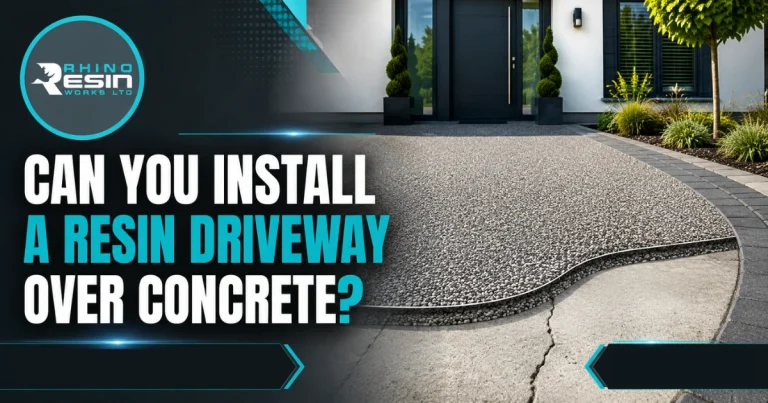
A: Yes – if the concrete is sound, level, and crack‑free. This is called a direct overlay and saves you thousands in excavation costs. Rhino Resin Works offers this where possible.